Showing posts with label Fathers' day. Show all posts

Sunday, May 29, 2011

Custody disputes: Call for India to sign Hague Convention

Custody disputes: Call for India to sign Hague Convention

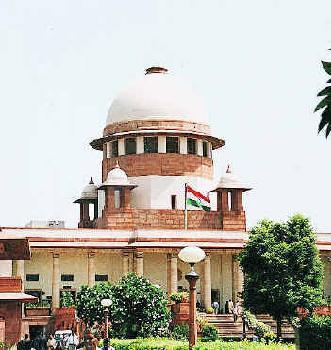
New Delhi, May 27 (IANS) A Supreme Court judgement affirming the jurisdiction of Indian courts to deal with disputes of children’s custody even if they are foreign citizens has raised demands for the government to accede to the Hague Convention dealing with such disputes and thus protect the rights of non-resident Indians.

In a judgement with far-reaching implications for Indians living abroad, the Supreme Court bench of Justice V.S. Sirpurkar and Justice T.S. Thakur ruled that simply because a foreign court had passed an order, it did not mean that Indian courts should put off deciding on the issue.

“Simply because a foreign court has taken a particular view on any aspect concerning the welfare of the minor, it is not enough for the courts in this country to shut out an independent consideration of the matter. Objectivity, and not abject surrender, is the mantra in such cases,” Justice Thakur wrote in the judgement.

This principle has been upheld by the apex court even earlier, but its reiteration in the recent judgement has raised demands for the government to take steps to accede to the Hague Convention on International Child Abduction.

Bangalore-based Children’s Rights Initiative for Shared Parenting has called for the government to sign the Hague Convention on the Civil Aspects of International Child Abduction.

In cases of one parent taking away the child to another country, the parent left behind is deprived of the custody of the child. The only solution for this crime is to sign the Hague Convention as it involves different aspects of private international law.

Supreme Court advocate Kirti Singh explained that Indian law does not recognise parental child abduction as a crime.

When one parent removes the child from the family home, or throws the mother out of the house – it is an offence against the child. The child is taken away to an alien atmosphere or is deprived of the presence of the mother and the child suffers due to the withdrawal from the familiar environment, Singh added.

The Hague Convention on the Civil Aspects of International Child Abduction, 1980, was a means of settling inter-country custody suits. India is not a party to the Hague Convention but with the large number of Indians living and working abroad, there is need to have amendments to the law to protect the rights of children in marital disputes.

The judgement was given on the appeal of a Delhi-based dentist against a Delhi High Court order overturning an interim order given by a city court in a custodial matter for her minor son.

The petitioner, mother of the 11-year-old son, had been awarded interim custody of the child by the trial court in Delhi.

The couple had been living in the US after their marriage, where their son was born. The appellant returned to India with her son in 2008 and filed an application for custody of the child under the Guardians and Wards Act.

Her US-based husband obtained a decree from a US court granting him custody of the child. He had further filed a case against his estranged wife for running away to India with their son despite a court decree granting him custody.

The Delhi High Court had set aside the trial court order, holding that an Indian court had no jurisdiction to decide on the matter as the father had been given custody of the child by a US court. The mother had appealed to the Supreme Court against the high court order.

The Supreme Court bench said since the interest and welfare of the child was of primary concern, a competent court in India was fully entitled and, indeed, duty-bound to examine the matter independently, taking the foreign judgment, if any, only as an input for its final adjudication. The apex court allowed the trial court to hear the mother’s application for custody of the child.

http://timesofindia.indiatimes.com/topic/article/07SmaRSeM78gP?q=India

Torn between Mom and Dad

Torn between Mom and Dad

By GEETA PADMANABHAN

When a marriage sours, it is the children who are affected the most. Torn apart, feeling guilty, children of broken homes cope with the trauma in different ways and the effects can be long-lasting. Counselling and love can hold out the hope of healing, says GEETA PADMANABHAN.


Balki, 40, married, with two kids and a high-income job, constantly picks on his mother


smlead

“You and dad kept quarrelling, not an ideal situation to grow up in,” he charges. “I have what it takes, would have done better if you'd spent more time with me.”

Sayee, 14, whose parents are separated, lives with grandma. “I do all the work,” she complained to her counsellor. She avoids friends since they talk of fun with their families. “What will I tell them?” she asked. A five-year-old, when asked to draw “My family”, drew a couple and two houses. Another, whose mom has remarried, asked in confusion, “Which father's name do you want?”

Somu, 13, answers all questions from his therapist with a nod. His case-sheet says he is quiet and obedient, so why have his grades plummeted? “He is taking the adult role of being responsible and adjusts with the situation — not a happy thing,” his counsellor says.

Psychiatrists and counsellors across the country tell us that among the children sent for counselling, an increasing number are from broken homes. “A new situation needing new approaches,” says Magdalene Jeyarathnam, Director, Centre for Counselling, Chennai, citing the column-hogging Vanitha-Akash case. Baffled by the kid's aversion to mom, the Madras High Court ordered their kid to be seen by a psychiatrist. “Either the child suffered some kind of abuse when he was with his biological mother and stepfather or his biological father tutored the child so well that he is refusing to go with his mother,” said the judge. “The case has posed the greatest challenge... For once I [was] at my wits' end on how to deal with a nine-year-old boy.”


Insensitive parents

Case studies have pieced together what kids go through in unhappy homes. Blissfully unaware of the impact, couples blame each other, raise voices and use harsh language, even as the kid watches helplessly (“Child abuse,” insists Magdalene.) He/She is sucked into the cold war between parents (“Tell dad he's free to do what he wants”/“Is your mom ever home?”), mercilessly co-opted into the frustrations of a crumbling marriage (“If not for you, I would have done it differently. I have to stay with him/her for your sake”.)

If this isn't devastating, there's the painful stretch of the divorce process. For months, the kid is hauled from court to stuffy court. The unkindest cut is when a stranger in a courtroom asks, “Whom do you want, mom or dad?” Once visitation rights are settled, he has to get used to shuttling between homes. Abduction delivers the next punch. The petrified kid is plucked out of familiar surroundings, threatened with unpleasant consequences if he squealed on the parent or forgot the tutored script. “I'll kill you” he's told. Grow up fast and “know” the world, is the message.

The result is psychological damage. “Children carry guilt and shame from a broken marriage,” says Mohana Narayanan, who visits schools to help kids with behavioural problems. “How kids react to the collapse depends on their age, personality and family support.” Less than ten, they may feel responsible for the split. Teens blame the parents. It's loss of face for them to be a product of a broken marriage. The stigma, young adults fear, might dent marriage prospects. “The boy might hesitate to tell his parents that the girl of his choice is from a “dysfunctional” family. He may look past this, but has a problem convincing his parents,” explains Mohana.

Magdalene puts it differently: “A pacifist kid feels responsible, an assertive kid rages, a scared kid withdraws. The effects can be long-lasting.” Prof. Manju Mehta, Psychiatrist, AIIMS, worries about the loss of a sense of security, so essential for a growing child. “A stable family provides bonding and values,” she says. “With separation children miss the feeling of being loved. Both parents contribute to development in toddlers.” What if the mother's earning capacity is less, she asks. “This may affect his self esteem, leading to other emotional or conduct problems.”


Extreme reactions

Psychologist Pratima Havaldar at a Managerial Development Programme, Mumbai, has noticed both extremes in kids from divorced families. “They talk obsessively or decide not to talk on issues related to their parents,” she says. “Some avoid talk of any relationship, with peers, relatives.” What starts as apprehension during the divorce process breaks into aggression, lack of concentration and lowered academic interest, post-divorce. Kids who're too young to understand parental conflict can still sense the atmosphere, and are frightened by the threat to their security. Being dependent on moms, they often regress in behaviour. Step families don't always fill the gaps, she says. Children may feel torn between the parent with whom they live and the one they visit. “Traumatised kids experiment with delinquent activities,” she says.” They become disruptive, pick up quarrels, use inappropriate words, indulge in petty theft.

PHOTO: K. MURALI KUMAR

girl child 

Spare the child the uncertainty...

Heart-wrenchingly, they try to cope. One kid told the counsellor, “If I choose one the other will be upset, so I begged, ‘ Please stay together, it doesn't matter if you don't talk to each other'.” “Research reveals kids push through emotion-bending situations,” says Pratima. “Impact of divorce is intense in the first two years, but kids learn to carry on.” It is also true that kids breathe easy after separation. Isn't “shanthi” preferable to slanging matches? “Kids love both parents and think, “Ok, let them stay apart. I'll deal with them individually.”

It's complicated, but the healing begins at home. Dr. Sudhir Hebbar, Apollo Hospital, Bengaluru, who's had parents consulting him on kids with post-traumatic disorder, says, “Kids suffer from watching parental quarrels. We do recommend parents stay together for the sake of children, but this is just one consideration.” If a parent substitute is available, the impact of one person's absence will be less, says Dr. Manju.

Opting out is an absolute last resort, says Mohana. “What message are you sending out? Before becoming parents, become partners, build a strong relationship. Realise, kids will be affected when the marriage sours.” Talking to kids whose families are unravelling is very difficult, she points out. Kids tell her, ‘We fight because they fight.' “You can't expect them to resolve their problems sensibly. I tell pre-teens and teens, ‘They're still your parents'. They understand, but find it hard to duck the emotional sledge-hammer.” Continue to be a friend to your ex-partner, so he/she can be a parent, says Magdalene. Be civil, make decisions about the kid together. You have no right to cut the kid off from the other parent, unless there is a physical threat.

Some mums now “prepare” the kids for the impending separation. “My children's picture book, Living With Mom, Spending Time With Dad, takes us through the myriad emotions that two children Stephen and Alex experience during this tumultuous period,” said Madhu. Magdalene flips a colourful children's book to a page with different expressions on a baby bear face. “I ask them to describe the expressions, and kids invariably attribute their own emotions to the faces. “He is crying and crying,” they say looking at a grimace. Reading books on how kids/animals cope can be therapeutic.”

Members of the NGO Children's Rights Initiative for Shared Parenting (CRISP) talk of better legislation. Since India hasn't signed the Hague Convention of Child Abduction, inter-parental child abduction isn't considered a crime here, they point out. They want child custody cases handled by a separate jury under the National Commission for Child Welfare (NCCW) so that they're dealt with sensitively and are disposed of speedily.

We have no say which way the marriage will sail, but couples can be guided by smooth winds, say experts. Magdalene tells of a woman who brought her kids aged 8 and 5 for counselling when she decided to separate. “After the divorce, the boy spent time with the father, got close to him, but worried it might upset mom. I spoke to her, and she said, “Why not? He's your father!” The kid needed to hear this from her.”


Counselling helps

Compulsory counselling for kids in all divorce cases and group sessions with other kids are some of the suggestions. Kids need to be assured that separation does not mean parents don't love them, says Magdalene.

“Say it a billion times, ‘It is not your fault, you have a life to live, you have a right to happiness'. Equip him to control what is within his control, but the best gift you can give the kid is to love your spouse.”

The names of children and parents have been changed.

Helpline for Centre For Counselling: +91-98847-00164 / +91-98847-00106

http://www.hinduonnet.com/mag/2011/05/29/stories/2011052950030100.htm
Monday, August 9, 2010

CHILD CUSTODY LAWS-Fathers denied child custody-demand SHARED PARENTING - p7 news

PART 1/2 - CHILD CUSTODY LAWS-Fathers denied child custody-demand SHARED PARENTING - p7 news 8aug10


PART 2/2 - CHILD CUSTODY LAWS-Fathers denied child custody-demand SHARED PARENTING - p7 news 8aug10


Sunday, June 20, 2010

CRISP (CHILD RIGHTS INITIATIVE FOR SHARE PARENTING) to Opt for Mother Teresa Home on Father's Day

CRISP to Opt for Mother Teresa Home on Father's Day

By Mandeep Puri

Deserted Fathers Favours Single Parenting

CHILD RIGHTS INITIATIVE FOR SHARE PARENTING (CRISP) in association with SAVE INDIAN FAMILY FOUNDATION (SIFF), whose members are deserted Fathers and elderly citizens will share their love and affection with the mentally retarded children at the Mother Teresa Home, Sector 23, Chandigarh, on the occasion of the Father's Day, here tomorrow.

These deserted fathers have lost faith in judiciary and are has been deprived off meeting their own blood. The members of the organisation have been seriously effects from the Parental Alienation of children due to single parenting in divorce/separation. They now favour single parenting. These deserted fathers are given limited hours of meeting their son/daughters by Indian Judiciary that too after fighting for years for their visitation rights.

Judicial & Governmental Apathy:

"The way justice is administered, the child is separated from the father (mostly) for years! One has to "apply" for "visitation"* that takes years to "grant" and even then for a paltry time. Innocent children suffer because parents are separating & fight for their egos! Our judicial mechanism has a deplorable understanding of child welfare based on biased and outdated social concepts. The father is a relegated to a mere "visitor", eliminating involvement in the child's life and just a "maintenance" paying ATM machine. It virtually condemns the child to an illegitimate. This is neither in the child's nor the family's interest and destroys the foundation for the future generation", said Mandeep Puri, the coordinator, Chandigarh Chapter.

"The organisation terms the judiciary as Anti-Child, Anti-Father and Anti-Family. Divorce/ Separation are between spouses. Not child and parent. This is common sense. There is no law requiring a normal father to keep away from his child, in divorce/ separation proceedings", Vikas Kapur, a member of the organisation.

Details:

Time: 2.30 PM ONWARDS

Date: June 19, 2010

Venue: Mother Teresa Home, Sector 23, Chandigarh

Mandeep Puri is a freelance writer who has been a Tribune crime reporter, business, sport, entertainment and municipal reporter. Contact Mandeep at his blog mandeeppuri.blogspot.com or at NewsBlaze

http://newsblaze.com/story/20100619072359mand.nb/topstory.html

Saturday, June 19, 2010

Rights of a Father? A case of reverse gender discrimination?

“The Family Court system blatantly discriminates against fathers, heartlessly separates them from and prevents their access to their own biological children”, said the newly formed All India Men’s Welfare Association (AIMWA).

As a sign of protest against the Family Court system, AIMWA organised a protest before the Family Courts on Friday at Chennai. Around fifty of its members were distributing pamphlets and campaigning against the system.

AIMWA is an organization formed to protect the constitutional and human rights of men. It fight against gender discrimination, ‘legal terrorism’ and every other form of abuse suffered by men.

M Antony Francis, coordinator, AIMWA told Law et al. News “Indian Family Courts have declared a war against fathers and are adopting every possible means to create a “Fatherless Society”. We concur with the recent observation of the Supreme Court of India that “the Hindu Marriage Act is breaking more families than uniting”. We would like to add that the worst sufferers of the Indian Family Court system are fathers and children”

He further added “Section 498A, framed to protect women from dowry harassment, has become a hot topic of discussion these days due to misuse. As per National Crime Bureau (NCRB), in the year 2007, 187540 people were arrested under Section 498A, of which, the offense could be proven only for 13247 people. 94% of those arrested were found innocent. As per NCRB, in the last ten years there has been a spurt in the incidence of suicide by married men. A law that was supposed to act instrumental in women empowerment and to enable them to speak against their abuse, looks like has today, become a curse for many a families”

“The modus operandi of the Family Courts includes depriving fathers of the right to love and care for their biological children and forcing fathers to pay huge sums of money to support children they are not allowed to see. The Family court system  encouraging false allegations of abuse to paint fathers as unfit parents” S Hariharan, General Manager of a Telecom Company, a divorcee himself in Chennai told Law et al. News.

Multiple legal battles by mothers eliminate biological fathers from their children’s lives, lamented another divorcee MP Kalaichelvan, a Civil Engineer.  He said that the present system  passes ex-parte orders based solely on the allegations made by a child’s mother..It also allow mothers to brazenly disobey visitation orders without legal repercussions to her. Sometimes biological fathers are labelled “kidnappers” for trying to make contact with their own children. Prolonging custody and visitation matters for years, thereby driving fathers into financial and emotional bankruptcy and forcing them to give up the desire to see their children, are the issues of concern to us,” he said.

In its memorandum to the Principal Sessions Judge VRamalingam, AIMWA has prayed “Special fast-track courts should be set up at the earliest to deal with custody issues. Exclusive, fully functioning Divisional Bench should be set up in all High Courts and Supreme Court to hear appeals in matters of child custody’’.

They also said when a person or couple approaches court for divorce, counseling of the parents by professional counselors should be given first priority and except in extreme cases of violence or unhealthy behavior by either partner, children should be given equal and meaningful access to both parents and grandparents on both sides.

The Memorandum further suggested that both parents should made financially responsible for the upbringing of child in proportion to their earnings and not based on demands made by either partner. If a partner prevents a child from having equal and meaningful contact with the other partner, they should be counseled first to understand the importance of equal parenting and the best interest of a child.

“If either partner repeatedly disobeys orders of equal access and meaningful contact with children, then the children should be placed in the full custody of the partner who will allow equal access to the other parent”, the participants demanded in their memorandum.

Rights of a Father? A case of reverse gender discrimination?

http://www.lawetalnews.com/NewsDetail.asp?newsid=1478